

acts of inconvenience
and this stupid, wonderful world

It’s been a brutally tiring couple of weeks. I’ve been juggling the hard work of completing 5 assessments worth a third of my degree. But the finish line is finally in sight. The day this newsletter goes out, I’ll be headed on a short camping trip, celebrating my birthday! My assessments will all be submitted. Glorious future me (as you read this, present me!) is probably having the very best time.
Anyway, I can’t wait.
I can’t wait for the particular relief of being somewhere with no signal, no deadlines, no low-level hum of you should be doing something.
For one of my assessments, I wrote a 3,500-word essay about writing as a practice of attention. This newsletter is an extension of that practice for me. It’s the act of directing my attention towards the everyday. The beauty amidst the challenges. The quote-unquote simple pleasures. Paying attention to the small, easy-to-miss moments that might otherwise pass me by entirely.
Last night, I watched Everybody to Kenmure Street at a community screening. There were moments of genuine shared laughter, and as I teared up, so did the people around me. The documentary retells the story of a singular, incredible day when a community came together – neighbours in their pyjamas, families awakening – to stop an immigration dawn raid. The very people I walk past in Glasgow, people like my own neighbours, who abandoned their routines (their biology class at school, their day at work, their time with family) and gathered on Kenmure Street to stop the deportation of two men.
Two neighbours.
I don’t think I’ve felt so empowered or so hopeful in such a long time as I did watching that film. It made me feel proud to call Glasgow my home, a city of protest and action. It also got me thinking about the act of putting your body on the line. Of the person who crawled under the immigration van to prevent its departure. Of the people who sat on the ground to prevent the line of police from battling their way through. The various individuals who brought out crisps and snacks, set up water stations, made signs and posters from “paint from the middle aisle of Lidl” and took on roles of care and responsibility. It made me think about what it means to be there for the people around you.
It’s one thing to disagree with something in principle; it’s another thing entirely to put your body in the way of it.
I read something recently that said the cost of community is inconvenience. It struck me as so different from the language we often use to talk about connection and belonging. We use words like support. Love. Kindness. Words that feel expansive and yet also elusive. But ‘inconvenience’ is something else entirely; it’s the act of helping a friend move when you’d rather a lie-in on your day off; it’s answering the phone when you’re tired; it’s showing up to something when you don’t quite feel like yourself. It’s allowing your time and your energy, your plans, your life(!), to be interrupted.
Lately, I’ve struggled to be the person who shows up. The steady accumulation of work and deadlines have prevented me from being there. But that’s okay. That’s the natural ebb and flow of life. Some years will be harder than others. Some weeks will be busier. Right now, I’m the one relying on my community, so appreciative of a meal cooked for me, of a last-minute lift, of friends who understand I still love them even if I can’t make it to their birthday – that my absence doesn’t mean indifference.
I think so many of us worry about inconveniencing those around us. So often, we’re scared to be the one in need. It’s easier on our egos to be the helper rather than the helpee. I know I’m guilty of apologising before I’ve even asked the question of support, softening my needs before expressing them, using language to wrap them up and minimise them into something easier to decline. “Only if you’re free.” “No worries if not.” “Honestly, don’t stress.” “I hate to be a bother.”
Of course, on the other side of this, there’s been a noticeable shift, particularly online, towards the language of boundaries. The act of “protecting your peace” and of “cutting off anything that doesn’t serve you.”
And I understand where that comes from; they’re lessons I’ve also had to learn. Lesson 1: I’m allowed to say no. Lesson 2: I don’t have to stretch myself endlessly to meet other people’s needs. I’ve had to learn that my time and energy are finite, and that overcommitting is worse in the end. Lesson 3: You cannot be everything to everyone.
So yes, there is nuance in all of these grand statements about community and peace.
But, if we all become perfectly boundaried, perfectly self-protective, perfectly unwilling to be inconvenienced… what happens to community then? Who shows up?
Who crawls under the van?
Watching Everybody to Kenmure Street, I saw people disrupting their “peace”. Choosing, actively, to step into discomfort. To push themselves to do something that would, undoubtedly, complicate their day. And yet, what they created was something far bigger than any individual inconvenience; rather, it was an act of radical collective care.
I’m walking a funny line here as I write this, knowing I’ve had to be stricter than ever with boundaries, had to say no in an effort to ensure I can show up in other ways in my life right now. So yes, of course I don’t think the answer is to abandon boundaries, but I do think there’s something worth sitting with in the tension between protecting yourself and being available to others. The line between rest and responsibility. Between the very real need to care for your own life and the equally real need to participate in the lives of those around you.
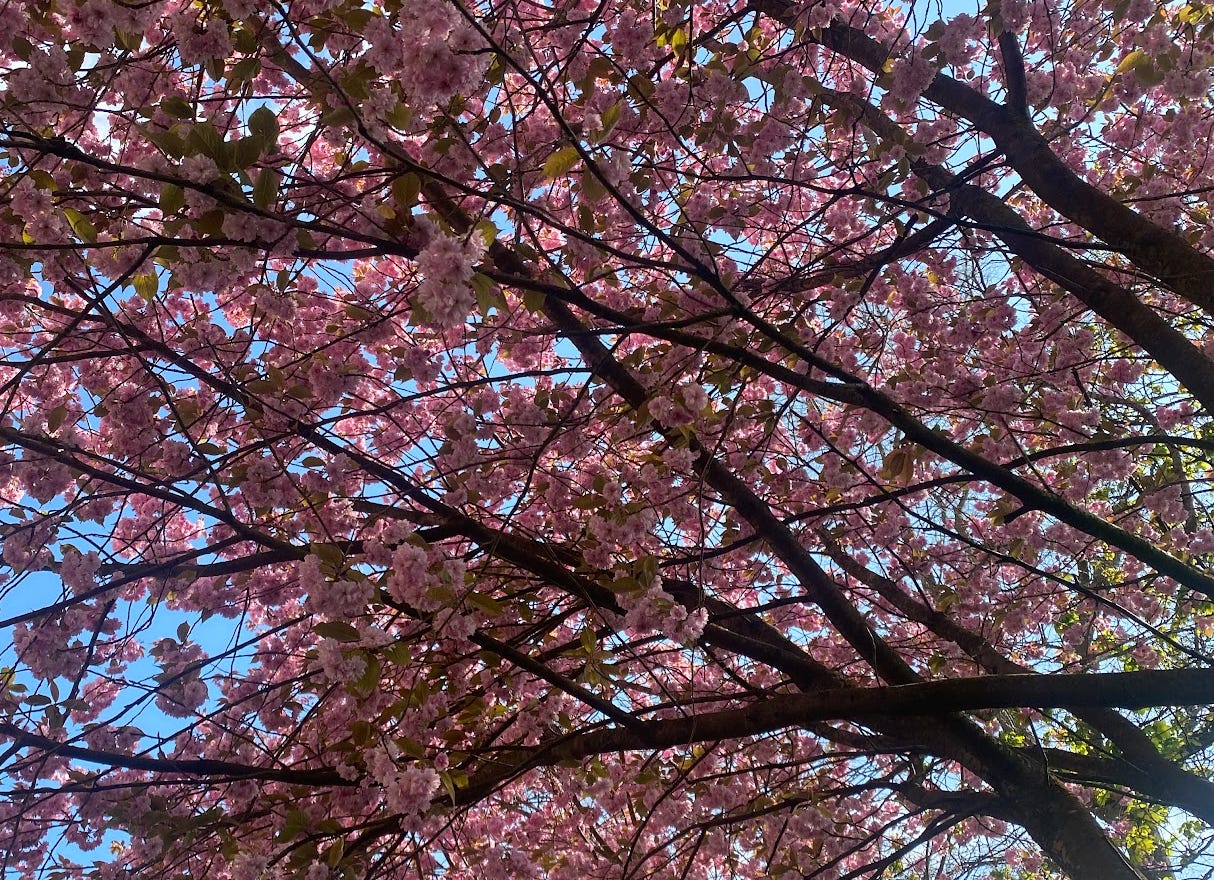
As I write this, I’m looking out at the beach from a cafe window. Cyclists shoot past. Kids on the way to school, bags slung low. Dogs dart along the sand, looping back toward their owners, tongues out, ecstatic. Seagulls swoop in, hoping for a dropped bagel. The sun is high, and spring is finally settling into sunnier days. Warmer temperatures forecast. A promise not yet fulfilled. It is also ordinary and beautiful.
And yet, I am thinking about that word. Ordinary.
I think about the people on Kenmure Street, and the small decisions. The ordinary day turned extraordinary. Someone who stepped out their front door to see what was going on. Someone who texted a friend. Someone who decided to stay. The ripple effect of each small decision – some bigger, sure, but all important. How many moments pass us by, unnoticed? How many times could we show up, in small ways, and don’t? And yet, how many times do we show up, and don’t quite recognise it as something meaningful?
Writing, for me, is a way of catching some of that. It’s the act of slowing down enough to see the quiet gestures that shape our days, the ones that don’t make documentaries but fill me with that same swell of hope.
Our attention matters. Where we place it, what we choose to notice, to value, to respond to, it all shapes the kind of life we end up living.
And right now, in this moment – the sun on the water, seagulls circling, the low hum of people moving through their day – I find myself thinking, what a stupid, wonderful place to be.

I aim to get you another newsletter in two weeks, but I will be on holiday – a proper big holiday then, so I might need to be realistic and postpone. But I’ll aim for it.
I also made a test issue of my print project that I’d like to introduce as part of this newsletter! If you’re interested in receiving a test issue (for free of course!), please do reach out.
